Product details
Product details
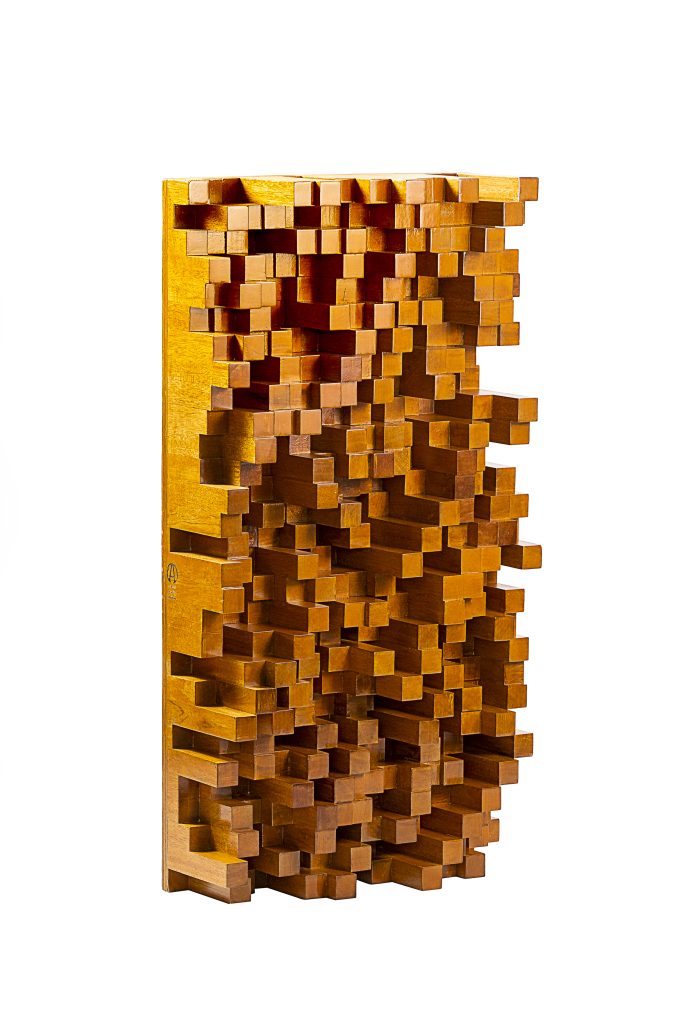
Here's what makes Quadratic Residue Diffusers different: they don't just absorb sound—they scatter it intelligently. The math behind QRDs isn't new (it's been around since the '70s), but it works. These diffusers use quadratic residue sequences to break up sound waves across 400 Hz to 4000 Hz, creating diffuse acoustic fields instead of predictable reflections. Most people treat rooms by soaking up sound with foam or panels. That works, but you lose the room's natural character—everything sounds dead. QRDs preserve liveliness while eliminating the actual problems: standing waves, flutter echoes, frequency buildups that make some notes louder than others. The carefully calculated well depths cause sound to travel different path lengths, spreading energy throughout the space rather than bouncing it straight back at you. We install these in recording studios, home theaters, broadcast facilities—anywhere accurate sound matters. The results are measurable: balanced frequency response, improved stereo imaging, controlled reverberation without the downsides of excessive absorption. And here's why that matters for mixing: when your room tells the truth about what's in your recording, you make better decisions. This particular diffuser features 19 wells with precise depth calculations. That's optimized for mid-frequencies where most musical fundamentals and vocals live. Whether you're calibrating a professional control room or treating a dedicated listening space, the acoustic improvements are immediate—both measurable and audible. **Key Features** - Quadratic residue sequence technology for broad-frequency diffusion - Optimized for 400 Hz – 4000 Hz (the critical range for vocals and instruments) - 19-well design with mathematically calculated depths - Moisture-resistant materials that hold up in various environments - Wooden finish that doesn't scream "foam panels everywhere" - Wall or ceiling mounting—flexible installation options - Works alongside bass traps and absorptive panels for complete treatment **Technical Specifications** - Dimensions: 600mm x 600mm x 100mm (custom sizes available) - Weight: 8.5 kg per unit - Diffusion Frequency Range: 400 Hz – 4000 Hz - Diffusion Coefficient: 0.78 average across operating range - Material Construction: High-density MDF with acoustic-grade veneer - Mounting Options: Wall-mounted, ceiling-hung, or stand-mounted - Fire Rating: Class B fire retardant treatment available - Finish Options: Natural oak, walnut, black, or custom stains **Applications / Use Cases** Recording studios use QRDs on rear or side walls to break up early reflections that smear transient detail and mess with stereo imaging. The result? More accurate monitoring where you can actually trust your mixing decisions. Home theaters benefit enormously because these create immersive sound fields that enhance dialogue clarity and surround effects. No more slap echoes from parallel walls, but you keep the spaciousness that makes home theater compelling. Broadcast facilities and voice-over booths use these to create neutral spaces where voice recordings maintain consistent tone without room coloration. The controlled diffusion prevents standing waves from creating peaks or nulls that you'd otherwise need to fix in post. **Why Choose This Product** The math behind QRD technology ensures predictable results—acoustic engineers have relied on this for decades. Unlike diffusers based on arbitrary shapes, quadratic residue sequences deliver measurable diffusion coefficients exactly where rooms commonly exhibit problems. Our build quality exceeds industry standards. Dense materials that resist sagging, moisture damage, and physical wear. This matters because cheaper alternatives compress and lose effectiveness over time. Your acoustic investment should keep performing consistently for years. These integrate seamlessly with comprehensive treatment systems—bass traps, absorptive panels, other acoustic elements all work together. You can build complete solutions using products designed to complement each other rather than fighting against incompatible approaches. **Frequently Asked Questions** **How many Quadratic Residue Diffusers do I need for my room?** It varies based on room dimensions, existing acoustics, and what you're trying to achieve. General guideline: treat first reflection points on side walls and 20-30% of the rear wall for significant improvement. But honestly, send us your room dimensions and we'll give you actual recommendations instead of generic advice. **Can I install these diffusers myself, or do I need professional help?** The mounting system is straightforward—experienced DIYers can handle it. But for optimal placement and actual acoustic benefit? We recommend working with an acoustic consultant who can identify first reflection points and design an effective layout. Installation is easy; knowing where to install is harder. **Are these diffusers effective for bass frequencies?** No. QRDs are optimized for mid-frequency diffusion. For low-frequency absorption and bass management, pair these with dedicated bass traps or Helmholtz resonators designed for frequencies below 200 Hz. Different problems need different solutions.